
Tis the season for the problem of damp
With autumn officially starting on September 22nd, now is the time to check your home for any problems with damp.
That is the advice of Midlands green energy expert Ron Fox, who said figures from the English Housing Survey showed that more than 920,000 of the 23,000,000 homes in England had rising damp or other condensation problems in at least one room of their home.
“What is fundamental to the problem is helping householders to understand which types of damp and mould are caused by their own behaviour and which are caused by structural problems in the home,” said Ron, of Noreus Ltd on the University of Keele Science and Innovation Park.
He advised all householders to make the following checks over the next few weeks.
External checks:
Damaged or blocked pipes, gutters or downpipes.
Broken seals around windows or ill-fitting windows that do not close fully.
Visible structural or facade defects, such as cracks in render or the foundation, missing or broken roof finishes.
Bridged or compromised damp proof course.
Internal checks:
Peeling wallpaper.
Visible damp or staining.
Obvious condensation.
Defective plaster.
Consistently high relative humidity, as assessed using a moisture meter or environmental monitors.
Low levels of loft or wall insulation.
Low internal wall temperature.
Damaged, blocked, absent or switched off mechanical ventilation (for example, extractors in kitchens and bathrooms).
Ineffective or broken heating systems.
Ron, of Noreus Ltd on the University of Keele Science Innovation Park, said the situation is much more serious if mould has started to grow around the home for tenants and householders as it can affect the health of the people living there, particularly children and the elderly.
People can suffer from nasal stuffiness or wheezing to eye or skin irritation while those with skin or respiratory conditions are particularly at risk.
He explained the five different types of damp:
Condensation damp happens when moisture generated inside the home cools and condenses on to colder parts of the buildings (for example window frames, corners and low points on walls behind sofas or wardrobes). This is the most common form of damp.
Penetrating damp is water that gets into the building from outside due to defects in the walls, roofs, windows or floors.
Rising damp is moisture that rises up through parts of the buildings in contact with the ground such as walls and floors. It is usually found in older properties and is often misdiagnosed. It can be identified through inspection, but chemical testing is the most appropriate way of confirming it. Often it is due to defective damp proof courses and membranes.
Traumatic damp can be caused by leaking water from waste and heating pipes, overflowing baths or sinks, burst pipes or defective water storage vessels inside the building. Traumatic damp can also originate from outside the property, for example from another building or from environmental flooding.
Mould is a type of fungus which grows in moist environments. Mould can cause adverse health effects as well as damage to buildings.
“It is important these problems are sorted out as soon as possible, so if in doubt get expert help,” concluded Ron.
For those wanting more advice about dealing with damp and mould call Ron on 0845 474 6641 or contact us here
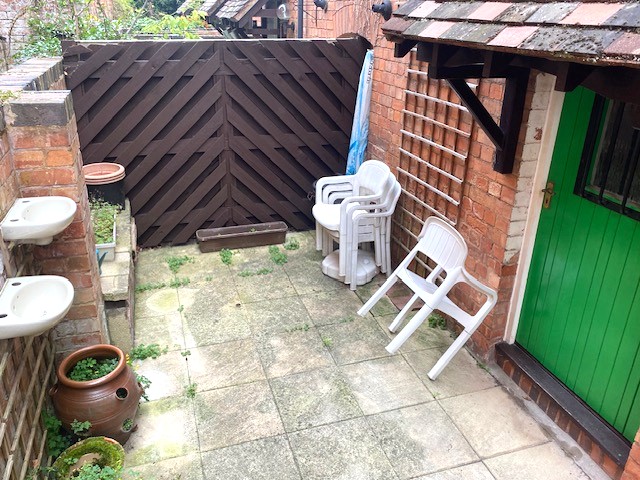
Caption: Now is the time to look for tell-tale signs of damp.