
‘Scandal’ of £7.8 billion cost to switch off wind farms
It is a “scandal” that the average annual household energy bill could rise by £100 a year by the end of the decade – to pay to switch off wind farms because of the failure to upgrade Britain’s power network.
That is the view of Midlands green energy expert Ron Fox, who was commenting on a report by the National Audit Office (NAO) that homes and businesses face a potential annual bill of £7.8 billion to turn off wind turbines and fire up gas plants to avoid blackouts in the UK.
The NAO’s views were supported by the National Energy System Operator (Neso), formerly part of the National Grid, who said also that rising gas prices were making it more expensive to run replacement gas plants.
“It is disgraceful,” said Ron, of Noreus Ltd on the University of Keele Science and Innovation Park, “that these costs are because of delays to a £70 billion programme to provide new power lines so the Government can hit its 2030 clean power pledge.
“Even worse, the NAO found that of the 56 projects deemed essential to hit this target, 50 were forecast to be late by at least a year, and added that meeting the proposed timetable could be ‘very challenging’.”
Of the other less critical projects, six are forecast to be late by between two and three years, nine by three and four years, four by between four and five years, one by between five and six years and one by between six and seven years.
Ron said the Clean Power 2030 Action Plan is the government’s bid to meet Britain’s electricity demand with energy from clean sources.
Neso estimates that potential delays to seven of the most critical projects could result in an extra £6.7billion of wasted wind.
On top of that, network companies are taking some power lines out of service temporarily to upgrade them. This will solve the issue in the long term, but could cause problems in the short term.
This has been made worse in recent years as wind farms have been allowed to connect to the network before it has been upgraded to be able to transmit all their power to consumers.
As a result, the network may be unable to cope with new wind farms being built, which could force those in remote locations to be switched off.
The National Grid is struggling to shift power from where it’s made to where it’s needed, he added.
In August it was revealed that Britain had already spent £1 billion this year paying wind farms to switch off while firing up gas plants. The wasted wind bill is now £300 million higher than a year ago.
Also, a report claims the UK was close to blackouts on June 23 this year when wind farms off Scotland had to be paid to stop generating electricity. This was at the same time as several plants were out of action for maintenance and sub-sea cables were exporting power out of southern England.
This news comes after the government had pledged to cut household energy bills by £300 a year by 2030.
This article raises some important questions, said Ron. Do you think the government has been completely open about the real cost of achieving net zero, as some of our readers think? Should people’s energy bills have to go up because of delays outside their control? Should the government be doing more to bring down gas and electricity payments – and if so, how? Send your views to Ron Fox at [email protected]
For more details about green energy and how to reduce your energy bills, contact Ron on 0845 474 6641 or contact us here
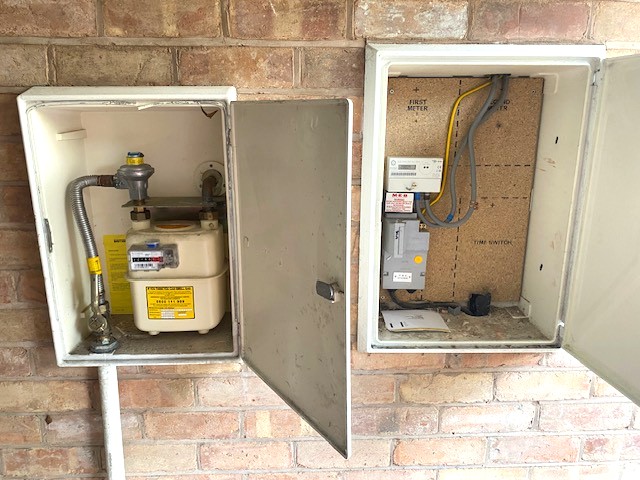
Caption: A blow for electricity prices? The average annual household energy bill could rise by £100 a year by the end of the decade – to pay to switch off wind farms because of the failure to upgrade Britain’s power network. Picture: John Butterworth